
Academic Life & Research
教育・研究
川口准教授がカンボジアで現地調査を実施:CKS、CPCS、Cambodia Peace Galleryとの交流を通じてUNTAC研究を深化
グロコミ,研究
2026.04.21
2026年3月、グローバル・コミュニケーション学部の川口智恵准教授が、日本学術振興会(JSPS)科研費(22K01377)の助成によるカンボジア調査を実施。
川口准教授からのレポートを紹介します。
In March 2026, Associate Professor Chie Kawaguchi of the Faculty of Global Communication conducted field research in Cambodia with support from the Japan Society for the Promotion of Science (JSPS) KAKENHI Grant (22K01377).
The following is a report from Associate Professor Kawaguchi.
私は現在、JSPS科研費研究課題「平和構築におけるアクター間相互作用と非リベラル国家化の関係性の解明」(課題番号22K01377)の一環として、1992~93年のUNTACに関わったカンボジア人の経験を聞き取る研究を進めています。UNTACは国際平和構築の代表的事例として知られていますが、現地の人びとがそれをどのように経験したのかについては、必ずしも十分に明らかにされてきませんでした。
今回の出張では、女性を含む7名のUNTAC経験者にインタビューを行い、通訳、翻訳、選挙関係者、選挙委員会関係者など、多様な立場からの語りを得ることができました。これらのインタビュー資料は、国際的な平和構築が現地社会でどのように受け止められ、経験されたのかを考えるうえで、きわめて重要な一次資料となります。今回の調査では、シェムリアップにある Center for Khmer Studies(CKS)にお世話になりました。
I am currently conducting research as part of the JSPS KAKENHI project, “Examining the Relationship between Interactions among Actors in Peacebuilding and Non-Liberal State Formation” (Grant No. 22K01377). This project focuses on the experiences of Cambodians who were involved in UNTAC (the United Nations Transitional Authority in Cambodia) during 1992–93. UNTAC is widely recognized as a landmark case of international peacebuilding, yet the ways in which local people experienced this intervention have not always been sufficiently explored.
During this research trip, I interviewed seven former UNTAC participants, including women. They had served in a variety of roles such as interpreters, translators, election-related personnel, and members of election committees. Their testimonies constitute invaluable primary-source materials for understanding how international peacebuilding was received and experienced within Cambodian society.
A key base for this research was the Center for Khmer Studies (CKS) in Siem Reap.
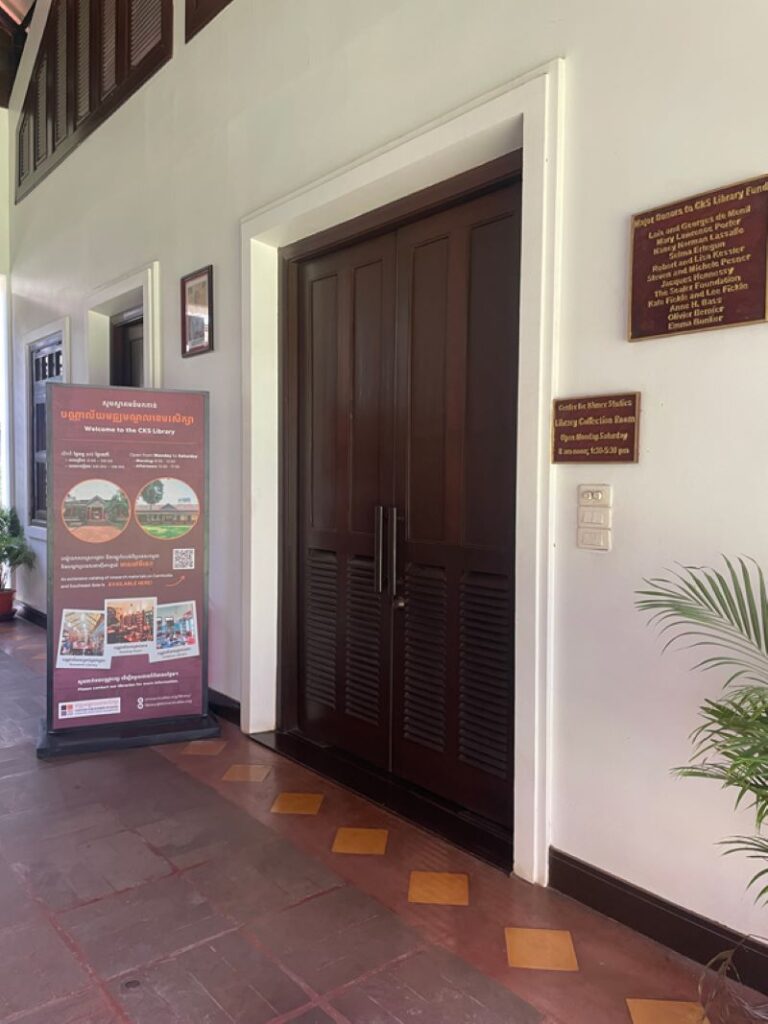
CKS Libraryの入口Entrance to the CKS Library
CKSは、カンボジアおよびメコン地域における社会科学・人文学研究、教育、公共的活動を推進する研究機関であり、研究者、学生、実務家が出会い、学び合う拠点として重要な役割を果たしています。
とりわけCKS Libraryは、カンボジア有数の学術図書館として知られており、今回の調査でも非常に恵まれた研究環境を提供してくれました。
CKS is a leading research institution promoting scholarship, education, and public engagement in the social sciences and humanities relating to Cambodia and the Mekong region. It serves as an important hub where researchers, students, and practitioners can meet and learn from one another. In particular, the CKS Library is known as one of Cambodia’s finest academic libraries outside the capital region, and it provided an excellent research environment during this visit.
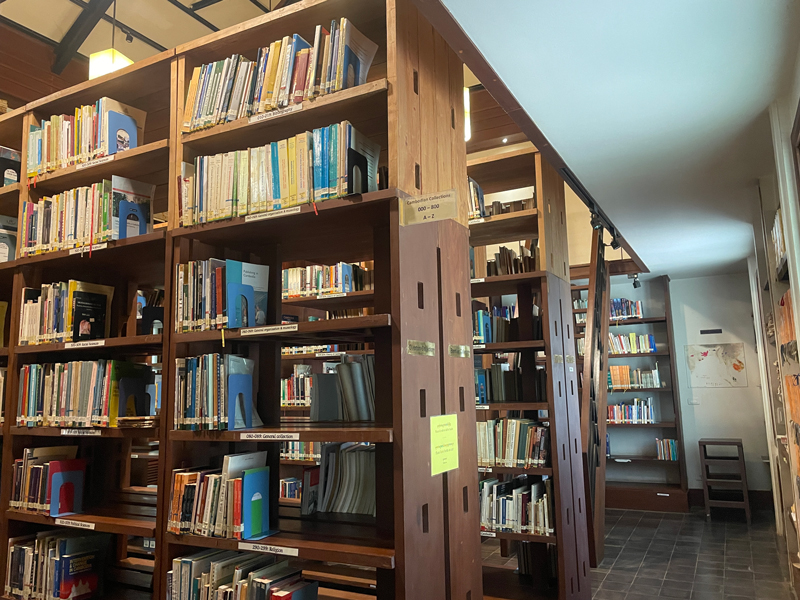
CKSライブラリ開架図書館Open-stack library at CKS
CKS Libraryでは、UNTAC期の選挙準備や選挙監視に関するマニュアル類を、英語・フランス語・クメール語で確認することができました。これらの資料は、UNTACの選挙関連業務がどのような制度的・言語的枠組みのもとで実施されていたのかを明らかにするうえで貴重であり、インタビューから得られた語りを歴史資料によって裏づける重要な手がかりとなります。(CKS – Center for Khmer Studies)
At the CKS Library, I was able to examine manuals and related documents concerning election preparation and election monitoring during the UNTAC period in English, French, and Khmer. These materials are highly valuable for clarifying the institutional and linguistic frameworks through which UNTAC’s electoral operations were implemented. They also provide an important historical basis for corroborating the oral testimonies collected through interviews.
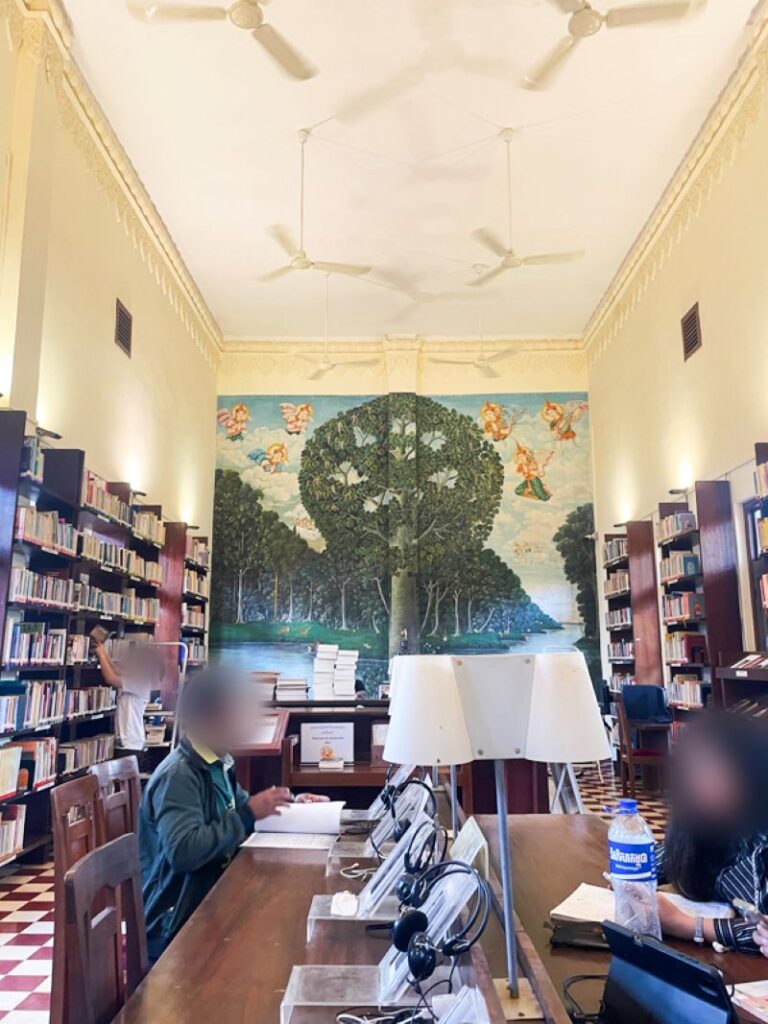
CKSライブラリ開架図書館 Open-stack library at CKS
また、Centre for Peace and Conflict Studies(CPCS)との交流も、今回の出張の大きな成果の一つでした。CPCSはカンボジアを拠点に、紛争転換や紛争解決のアプローチに基づき、多様なローカル平和構築の取り組みを支えてきた組織です。関係者との対話を通じて、平和構築が地域社会のなかでどのように支えられ、実践されているのかについて理解を深めることができました。(Centre For Peace & Conflict Studies)
At the CKS Library, I was able to examine manuals and related documents concerning election preparation and election monitoring during the UNTAC period in English, French, and Khmer. These materials are highly valuable for clarifying the institutional and linguistic frameworks through which UNTAC’s electoral operations were implemented. They also provide an important historical basis for corroborating the oral testimonies collected through interviews.
CPCSは、バッタンバンの Cambodia Peace Gallery の設立・発展にも深く関わってきました。バッタンバンで訪問したCambodia Peace Galleryは、カンボジアの戦争の歴史だけでなく、そこから平和と和解へ向かった歩み、そして平和を支えてきたカンボジアの人びとの努力を学ぶことのできる場です。
CPCS has also played a significant role in the establishment and development of the Cambodia Peace Gallery in Battambang. My visit to the gallery demonstrated that it is not only a place to learn about Cambodia’s history of war, but also a space that highlights the country’s journey toward peace and reconciliation, as well as the efforts of Cambodian people who have worked to sustain peace.
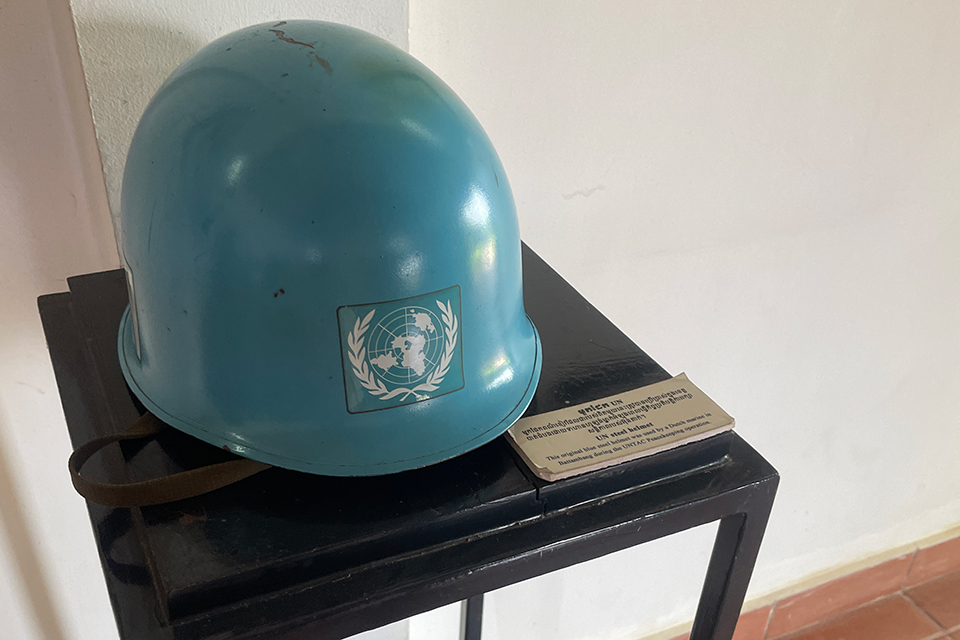
UNTACで実際に使用されたPeacekeeperのブルーヘルメット
Blue helmet worn by peacekeepers during UNTAC operations
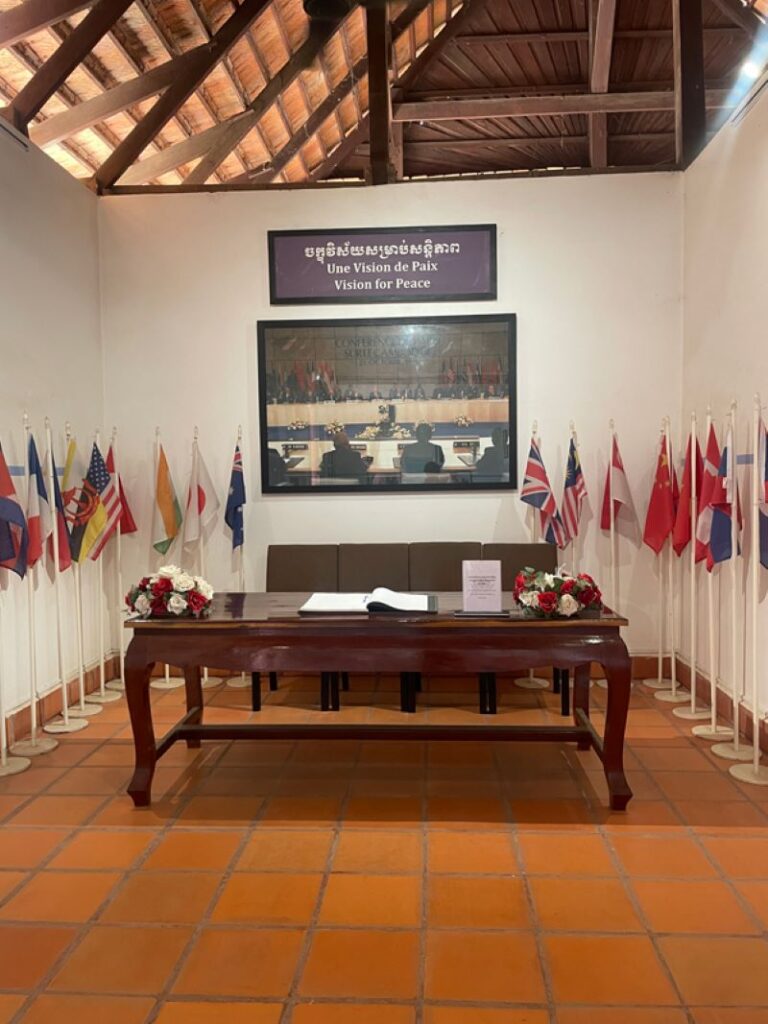
パリ和平合意の会場を模した展示
Exhibition recreating the venue of the Paris Peace Agreements
Cambodia Peace Galleryの設立に重要な役割を果たしたカンボジアの内戦を生き抜いた世代、そして彼らからバトンタッチされた若いスタッフや大学生ボランティアによる展示解説や対話を通じて、紛争の記憶がどのように社会の中で保存され、次世代へ伝えられているのかを具体的に考える機会となりました。
Through exhibition explanations and dialogue with staff members and university student volunteers—including individuals from the generation that lived through Cambodia’s civil war and younger generations who have inherited that legacy—I was able to reflect concretely on how memories of conflict are preserved within society and passed on to future generations.
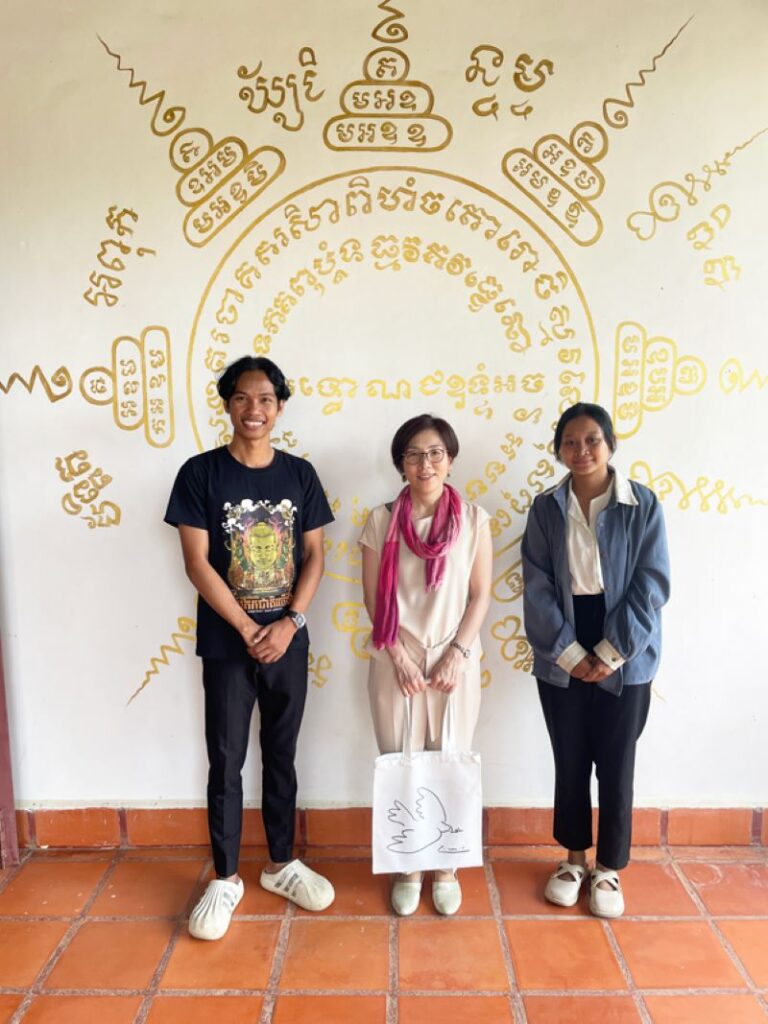
Peace Galleryのエントランスでスタッフと学生ボランティアと一緒に
At the entrance of the Cambodia Peace Gallery with staff and a university student volunteer.
Peace Galleryの訪問は、失われていく個人の記憶と変わりゆく社会の記憶をどう繋いで
いくのか、日本にも通じる課題について考え直すきわめて意義深いものでした。同時に、日本や自身の研究が、現在も続く平和構築にどのような貢献をすべきか改めて問い直す機会となりました。 (Cambodia Peace Gallery)
The visit to the Cambodia Peace Gallery was profoundly meaningful in prompting reflection on a challenge relevant not only to Cambodia but also to Japan: how to connect fading personal memories with changing collective memory. At the same time, it encouraged me to reconsider how Japan, and my own research, can contribute to ongoing peacebuilding efforts today.
今後も、カンボジアの人びとの声に耳を澄ましながら、平和構築を現地の視点から捉え直す研究を進めていきます。
この調査は、JSPS科研費22K01377の助成を受けたものです。
I will continue to listen carefully to the voices of the Cambodian people and pursue research that reconsiders peacebuilding from local perspectives.
This research was supported by JSPS KAKENHI Grant No. 22K01377.
(川口智恵)Chigumi Kawaguchi